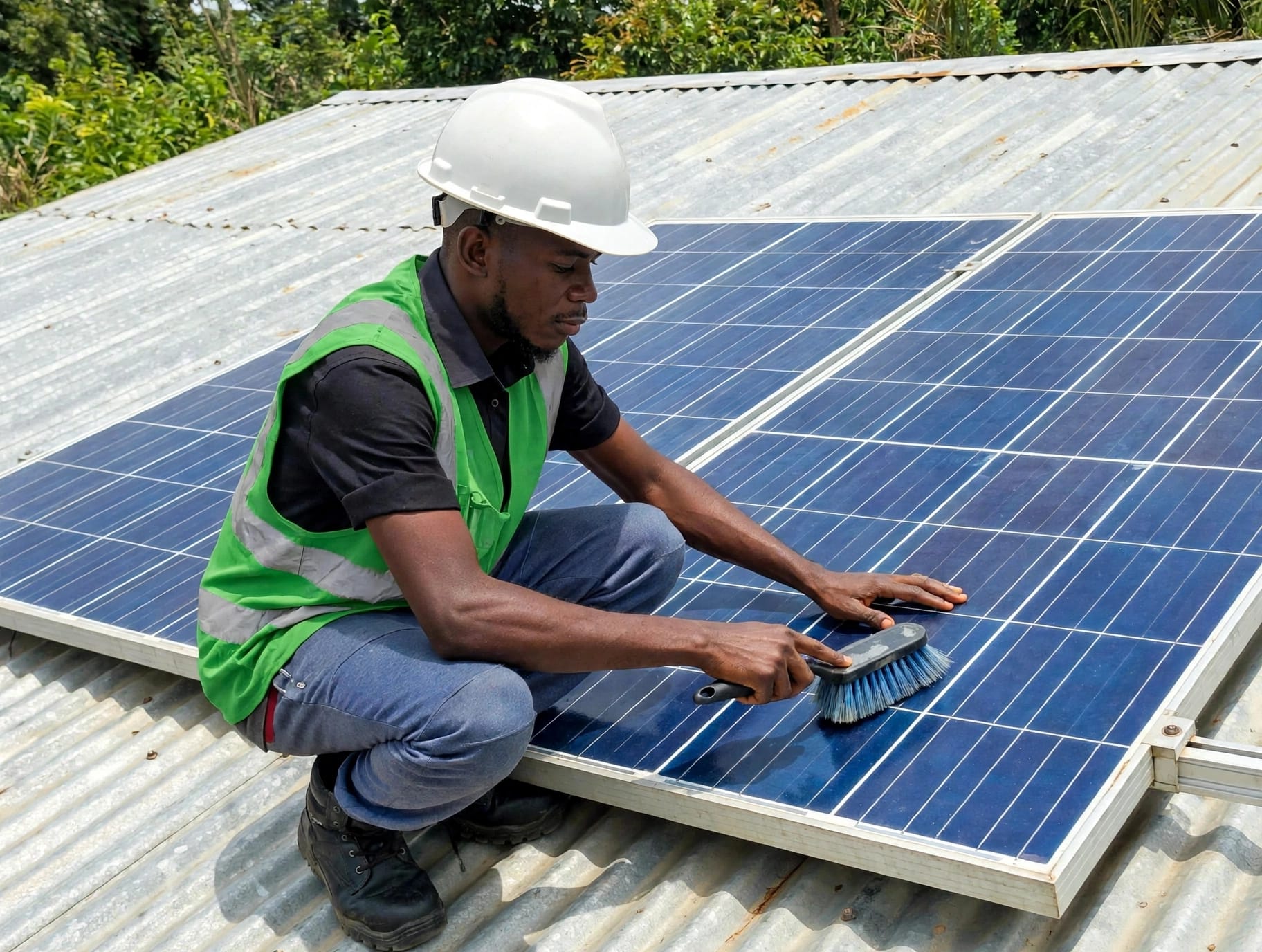
Two solar installers can quote the same system for the same money, and only one of them will still answer the phone in four years. The difference is rarely visible in the price. It shows up when the battery terminals are loose, when the cable that was specified is not the cable that arrived, or when the array produces a fifth less than the design promised and there is nobody accountable. Choosing a solar installer is mostly a process of verification, and the firms willing to be verified are easy to separate from the ones that are not.
What a proper solar site survey actually looks like
If the installer quotes a system without visiting the site, stop. Not “we passed by”, and not a video call with a tape measure held against the ceiling. A real survey is a two-hour job with a written output, and its purpose is to find out things that change the design: where the sun actually falls across the year, what the shading does at 4pm in July, how far the cable run is, where the existing distribution board sits, whether the roof can carry the load, and where the battery can live without creating a ventilation or access problem.
A survey that only measures the roof misses most of what matters. The array is the easy part. The decisions that determine whether a system works concern the inverter, the protection, the earthing and the cable route, and none of those can be seen from the driveway.
Questions to ask while they are on the roof
Ask what the shading assessment looks like and whether the solar installer did it physically or from a satellite image. Ask how the cable will be routed and how it will be protected from a future tradesman who does not know it is there. Ask where the battery will go, and whether the room they have chosen is ventilated, accessible and out of reach of children. Ask what happens during installation if it rains. A solar installer who answers all four without hesitating has done this before.
The questions to ask before you sign anything
Put these in writing and get written answers. A seller who cannot answer in writing is selling you equipment, not a system.
- Which exact module, inverter and battery models will be installed, and will the invoice name them?
- What is the continuous output of the inverter in watts, and what is its surge rating?
- What is the battery bank capacity in kilowatt-hours, and how much of that is usable after the depth-of-discharge limit?
- What cable gauge runs from the array to the inverter, and what is the run length?
- What earthing arrangement will be installed, and who tests it?
- What is the workmanship warranty period, and what does the equipment warranty cover separately?
- What will not be covered by either warranty?
The seventh question is the one most customers never ask, and the answer separates a professional from a salesman. “Water ingress at the roof penetration, and anything the customer does to the wiring” is an honest answer. A refusal to answer suggests the warranty has not been thought about, which usually means there is not one.
Then ask the solar installer to size the system in front of you, on paper, in about five minutes. Start from the wattage of each appliance and roughly how long it runs, which is the method in our guide to building a solar load list. Any installer who cannot do that is not designing, they are quoting a package, and a package is built around what the yard stocks rather than what you use.
Documents that prove a solar installer is serious
There is no Nigerian licensing body that certifies solar installers, so the checking is yours to do. What you can verify is concrete, and it is worth asking for each item before the deposit rather than after the panels are on the roof.
| Document | What it must state | Warning sign |
|---|---|---|
| Written quotation | Model numbers, quantities, itemised price, validity period | A price sent only as a voice note or image with no company name |
| Manufacturer datasheets | Exact model electrical data and warranty terms | A brochure showing the product family instead of the model |
| Design document | Load list, array, inverter, battery, protection, cable runs | No daily energy figure for your location |
| Company registration and tax details | Registered legal entity and tax identification number | A trading name with no legal entity behind it |
| Workmanship warranty | Period covered and what is excluded | Warranty mentioned only in conversation |
On the datasheet specifically, insist on the manufacturer’s document rather than the sales sheet. The distinction between the two is where most of the misleading claims in this market live, and it is explained in our guide to how to read a panel datasheet. A datasheet also lets you check the module’s power tolerance and temperature coefficients, which is how a cheap panel in a hot climate gives you less than its label promised.
And check the bank account. A quotation raised by one company name, with an invoice from a second, and payment requested to a third personal account is the most common structural warning sign in this market, and it is visible in about ten seconds if you look.
Red flags that should end the conversation
Some behaviours are strong enough on their own that you do not need more evidence.
- A verbal price and a verbal design. A quote that exists only as a WhatsApp message is unenforceable and uncheckable. Insist on something signed, even if it is a single page.
- No datasheet for the equipment. If the installer cannot produce the document the manufacturer publishes, they have probably not read it either.
- Cash only, no receipt. Not primarily a tax argument, although that matters. A business that will not issue a receipt will not honour a warranty, because the warranty depends on proving what was sold.
- Reviews that all appeared in the same week. Check when the accounts were created, not just how many reviews there are. Manufactured social proof is trivially easy to spot and is now routine in this market.
- Enormous savings pressure. Discounts attached to a same-day decision, or a price described as expiring, are how a rushed customer ends up with a system nobody sized.
- Oversized claims. A 5 kW system does not run a family’s air conditioning, water heater, freezer, television and washing machine for a whole evening. If the installer tells you it will, they have not sized anything, and air conditioners alone will show you why.
What a signed design should contain
Ask for a one-page design document before the deposit. It should list the load you agreed to serve, the module model and count, the inverter model with continuous and surge output, the battery bank chemistry and usable capacity, the charge controller, the protection devices, the cable runs and gauges, the earthing arrangement, and an expected daily energy figure for your location. That last number should be defensible against a resource map, and the European Commission’s PVGIS tool is the reference most installers in Nigeria do not think to check against.
A good design is also honest about what is excluded. If the load estimate omits the second fridge, the guest room air conditioner or the water pump, the system will disappoint you and the installer who signed it will point at the document. Getting the omissions on the record before installation is the cheapest insurance available.
One further question deserves an answer in writing: what is the escalation path when something fails. Who do you call, within what time, and who pays for the call-out. In a market where the cheapest quote often comes from the trader with the thinnest margin, the answer tells you whether the business expects to still be here in three years.
Frequently asked questions
How do I know if a solar installer is a registered company?
Ask for the company name and registration number, then search the corporate affairs registry for that name and confirm the details match. Cross-check that the name on the quotation, the invoice and the receiving bank account are identical. Registration does not guarantee competence, but a trading name with a mismatched account is a reason to stop before you pay anything at all.
Should I choose the cheapest of three quotes?
No, but do not choose the dearest either. Choose the quote that itemises the most, because an itemised quote can be compared and an unitemised one cannot. Normalise the three onto the same specification — same inverter, same usable battery capacity, same cable — and then compare. The spread usually narrows dramatically, and whatever difference remains is usually genuine rather than rhetorical.
Do solar installers offer a workmanship warranty?
They should, and it is separate from the manufacturer warranty on the equipment. A workmanship warranty covers what is the installer’s fault: terminations, connections, settings, mounting and cable entry. A sensible minimum is one year, ideally two, in writing. Equipment warranties of five to ten years on inverters and longer on panels are normal, and we explain what those actually promise in our guide to solar panel warranties.
Is it cheaper to buy the equipment online and install it yourself?
The hardware may be cheaper, and the workmanship becomes your problem. The failure modes in a solar system are almost entirely electrical: loose lugs, undersized cable, missing protection, poor earthing. A self-installed system that has never been tested is not cheaper, it is unverified. If you want to save money, the defensible route is to pay a solar installer for the design and the commissioning and do the mechanical work yourself.
Key Takeaways
- No site visit, no quotation. Insist on a written survey output before you pay a deposit.
- Demand exact model numbers on the invoice, not a brand and a wattage.
- Check that the company name matches on the quote, the invoice and the bank account.
- Refuse a verbal price, a cash-only deal with no receipt, or an oversized performance claim.
- Normalise every quote onto the same specification before comparing totals.
- Get the workmanship warranty period and the failure escalation path in writing.
Once you have picked a candidate, read our guide to what a solar installation cost should itemise so you can check their quote line by line before you sign.
Sources: PVGIS, European Commission Joint Research Centre (solar resource reference data); photovoltaic system, system components and losses.


0 Comments