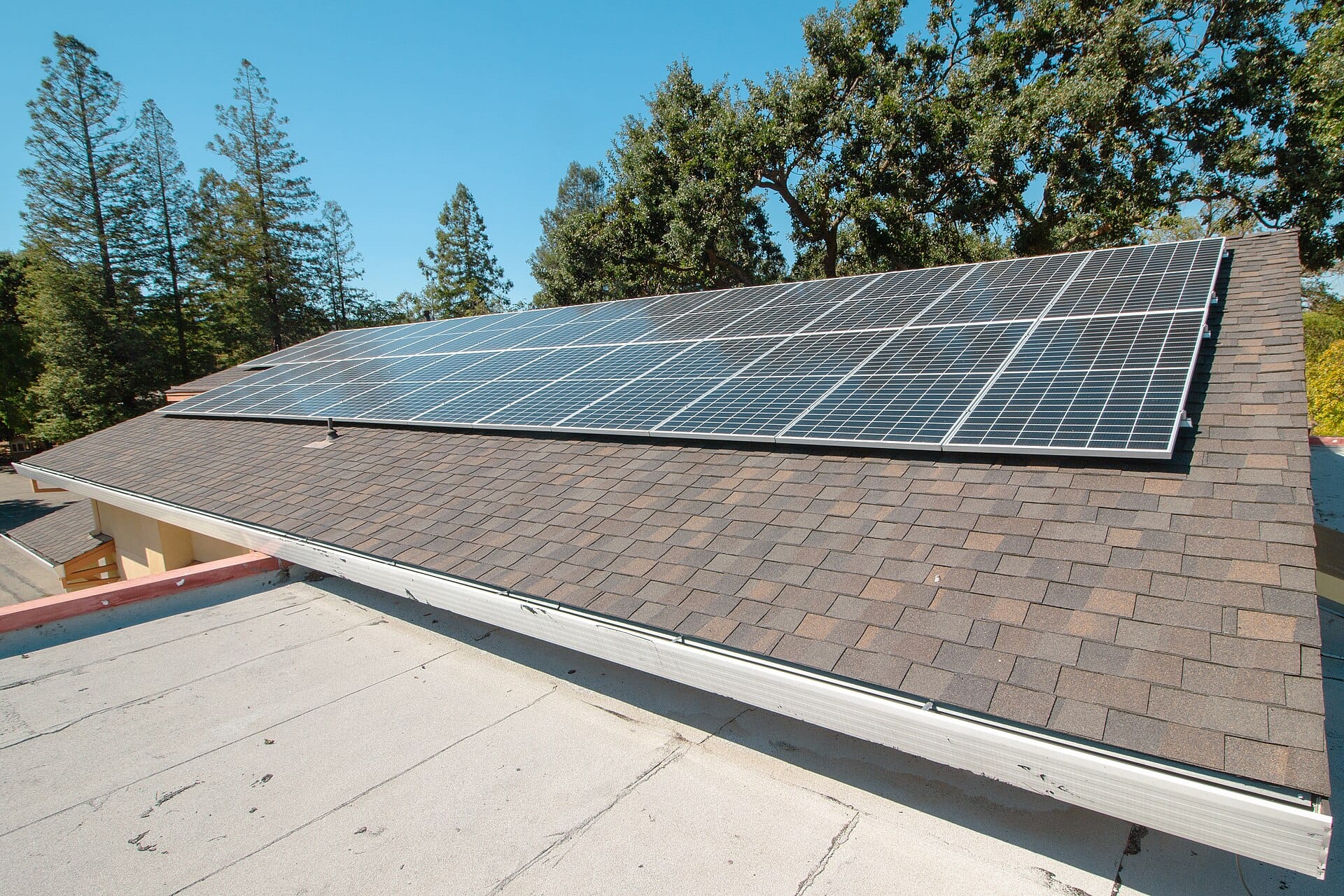
Ask three installers for a solar installation cost in Nigeria and you will get three answers that differ by a third. The gap is rarely about panel quality. It is usually about what each quote assumes: how many hours of backup you get, whether cables are included, who certifies the work, and whether the panels are new or opened from a pallet. This guide sets out how the money is actually divided, what a fair quote must itemise, and how to work out whether the number on the page is worth what you are paying.
What a solar installation cost actually covers in Nigeria
A solar installation cost is not one product. It is a bundle of five distinct line items, and a quote that gives you a single number has hidden at least three of them. The most common mistake is comparing a bare-hardware quote from a market trader against a full installed quote from an engineering firm, and concluding that the trader is cheaper. They are not cheaper. They are quoting a smaller job.
The five components are: the modules (panels), the inverter that converts their direct-current output into usable alternating current, the storage battery bank, the balance of system (charge controller, mounting structure, cables, protective devices, distribution board changes, earthing), and labour including the site survey, design, permits and commissioning. Any two of these can be varied to move the total by a factor of three while the system still technically “works”, which is precisely why the itemisation matters more than the headline.
The two costs people forget
Most disputes come from the balance of system and from labour, not from the panels. Moving from a single-family array to one that also serves a three-bedroom flat means running heavier cable from the roof to the board, adding a changeover or AC distribution board, and often upgrading the earthing. Those items are quoted by the metre and by the hour, and they are the first thing squeezed out when a quote is being cut to win the job. A system that saves on cable gauge may never reach its rated output at the far end of the run, and the shortfall appears as low production, not as a visible fault.
The second forgotten cost is the site survey and the design. An installer who quotes without walking the roof, measuring the cable run and confirming where the battery will live is guessing. A design document is the only thing that ties the equipment to your actual load, and the only reference you have when something fails in year three.
Typical system sizes and what dominates each cost
Rather than quote naira figures that will be stale within weeks — panel prices track the exchange rate and import duty — it is more useful to look at system archetypes and see which line item controls the cost in each. Once you know that, you can price any quote from the current landed panel cost and the battery and inverter prices you can verify.
| System archetype | Array | Inverter | Storage | What usually sets the cost |
|---|---|---|---|---|
| Small DC load, no backup | 1 to 2 kWp | None, or DC to DC | None | Modules and mounting |
| Lights, router, TV, fan | 1 to 2 kWp | 2 to 3 kVA | 1 to 2 kWh | Modules |
| One to two bedroom flat, essential circuits | 3 to 5 kWp | 3 to 5 kVA | 2 to 5 kWh | Modules, then balance of system |
| Three-bedroom flat, most circuits | 5 to 10 kWp | 5 to 10 kVA | 5 to 10 kWh | Storage, then modules |
| Shop or office, POS and refrigeration | 5 to 15 kWp | 10 to 15 kVA, often three-phase | 10 to 30 kWh | Storage, then inverter |
The pattern is consistent. Add no storage and the modules dominate. Add meaningful autonomy and the battery bank takes over, because it scales with inverter power and with the hours you want to ride through an outage. Every additional hour of backup multiplies the storage line, not the panel line. That is the most useful thing to understand about the arithmetic before you start comparing numbers.
What quotes hide
Four omissions account for most of the gap between a cheap quote and an honest one. Learn to look for them.
- Unspecified modules. A quote reading “solar panels” with no wattage, no cell technology and no manufacturer is not a quote. Ask for the exact model and the datasheet. Panel poly versus mono matters less than you would think, but wattage and warranty terms matter enormously.
- Opened or refurbished stock sold as new. Panels held in an unheated Lagos warehouse for two years will often have visible cell discolouration, and their output is lower on day one. Ask whether the stock is new, and ask to see the batch code on the frame.
- A battery quote with no usable capacity. Sellers quote label capacity because label capacity is the bigger number. The number that decides whether you survive an outage is usable capacity after the depth-of-discharge limit, and that gap is large. Our guide to lithium versus lead-acid covers the trade-off in full.
- Labour and certification treated as free. Ask who signs off the work, whether the workmanship carries a warranty, and whether the installer carries public liability cover. An installer who cannot name their protection has nothing to lose.
Comparing two quotes on equal terms
Put both quotes into a spreadsheet and normalise them. For each one, record: module model and wattage, inverter model with continuous output in watts and surge capability, battery bank chemistry and usable kilowatt-hours, charge controller, cable gauge and run length, earthing provision, protection devices, mounting type, and the labour and warranty terms. Then divide the total by usable kilowatt-hours if the system has storage, or by array kilowatt-peak if it does not. That normalised figure is the only honest way to compare.
Two cheap-looking systems routinely resolve to the same normalised cost once you add the missing balance-of-system items, and sometimes to a higher one. Conversely, a quote that looks expensive because it itemises everything may genuinely be better value. This is where understanding the role of the inverter pays off: it is the component most often downgraded, and the one whose failure ends the system.
The running-cost arithmetic that decides payback
The number on the quote is not the decision. The decision is made by comparing what you currently spend on power with what the system will cost you over its life, and in Nigeria that comparison is usually favourable, but rarely for the reason vendors claim. It starts with what a kilowatt-hour from a diesel generator costs you. Generators commonly burn roughly a quarter of a litre per kilowatt-hour near full load, and considerably more when lightly loaded, because fixed engine losses dominate at part load. The fuel consumption breakdown by load level is worth reading before using any rule of thumb.
| Pump price (naira per litre, illustrative) | Litres per kWh at part load | Cost per kWh |
|---|---|---|
| Replace with your pump price | 0.28 | price multiplied by 0.28 |
| Replace with your pump price | 0.36 | price multiplied by 0.36 |
| Replace with your pump price | 0.45 | price multiplied by 0.45 |
On the revenue side, the output you can bank is not the panel nameplate. The PVGIS tool from the European Commission’s Joint Research Centre lets you enter your coordinates and get a modelled energy yield. Run for a 1 kWp array with a 10 degree tilt and 14 per cent system losses, it returns roughly 4.05 kWh per day in Lagos, 4.17 in Abuja, 4.59 in Kaduna and 4.77 in Kano. Multiply by 365 and you have a realistic annual figure, not a marketing one. Work out the cost per kilowatt-hour you generate, then compare it against the diesel figure above. That single comparison, done honestly, settles most arguments about whether solar is worth it.
Frequently asked questions
How much does a solar installation cost for a 3-bedroom flat in Nigeria?
It depends almost entirely on how much storage you want. A 3 to 5 kWp array without a large bank is dominated by module cost, while a 5 to 10 kWp system with 5 to 10 kWh of storage is dominated by the battery bank. Because prices track the exchange rate, any naira figure quoted in an article will be stale within weeks. Get two itemised quotes on the same specification and compare them on usable kilowatt-hours.
Is a cheaper quote always a worse system?
Sometimes, but not always. Cheap quotes are worse when the saving comes from thinner cable, a smaller inverter than the load needs, opened panel stock, or an omitted balance of system. They are fine when the saving comes from simpler design, a site with an easy cable run, or a customer who genuinely does not need five hours of autonomy. The saving is only suspect if the installer cannot show you exactly where it came from.
Should I buy the panels and hire labour separately?
It is possible, and for a large commercial array with your own project manager it can be sensible. For most homes it is a poor trade, because the parts that go wrong are the connections, the protection, the earthing and the settings, and nobody will take responsibility. If you do separate procurement, insist that the same written specification governs both halves.
Does the price include permits and certification?
It should be stated explicitly, one way or the other, in every quote. Ask directly. A quote that is silent on permits, on the workmanship warranty period, and on who handles any inspection is incomplete, and an incomplete quote is a negotiating position rather than a price. We explain what to demand in detail in our guide to choosing a solar installer.
Key Takeaways
- A solar installation cost is five line items, not one. Demand the itemisation before you compare anything.
- Storage, not modules, sets the cost once you want real hours of backup. Hours of autonomy multiply the battery line only.
- Panels without a stated model, wattage and batch code are the most common source of a bad price.
- Compare quotes on usable kilowatt-hours, not on the headline total.
- Model your real yield with PVGIS and compare it against your own diesel cost per kilowatt-hour.
- If a quote omits cable, protection, earthing or workmanship warranty, it is not cheaper, it is unfinished.
If you want to see how the specification is worked out before the costing happens, start with how to build a solar load list, then read how the numbers translate into a realistic solar payback period.
Sources: PVGIS, European Commission Joint Research Centre (modelled yields, 1 kWp, 10 degree tilt, 14 per cent losses); diesel generator fuel consumption by load level.


0 Comments