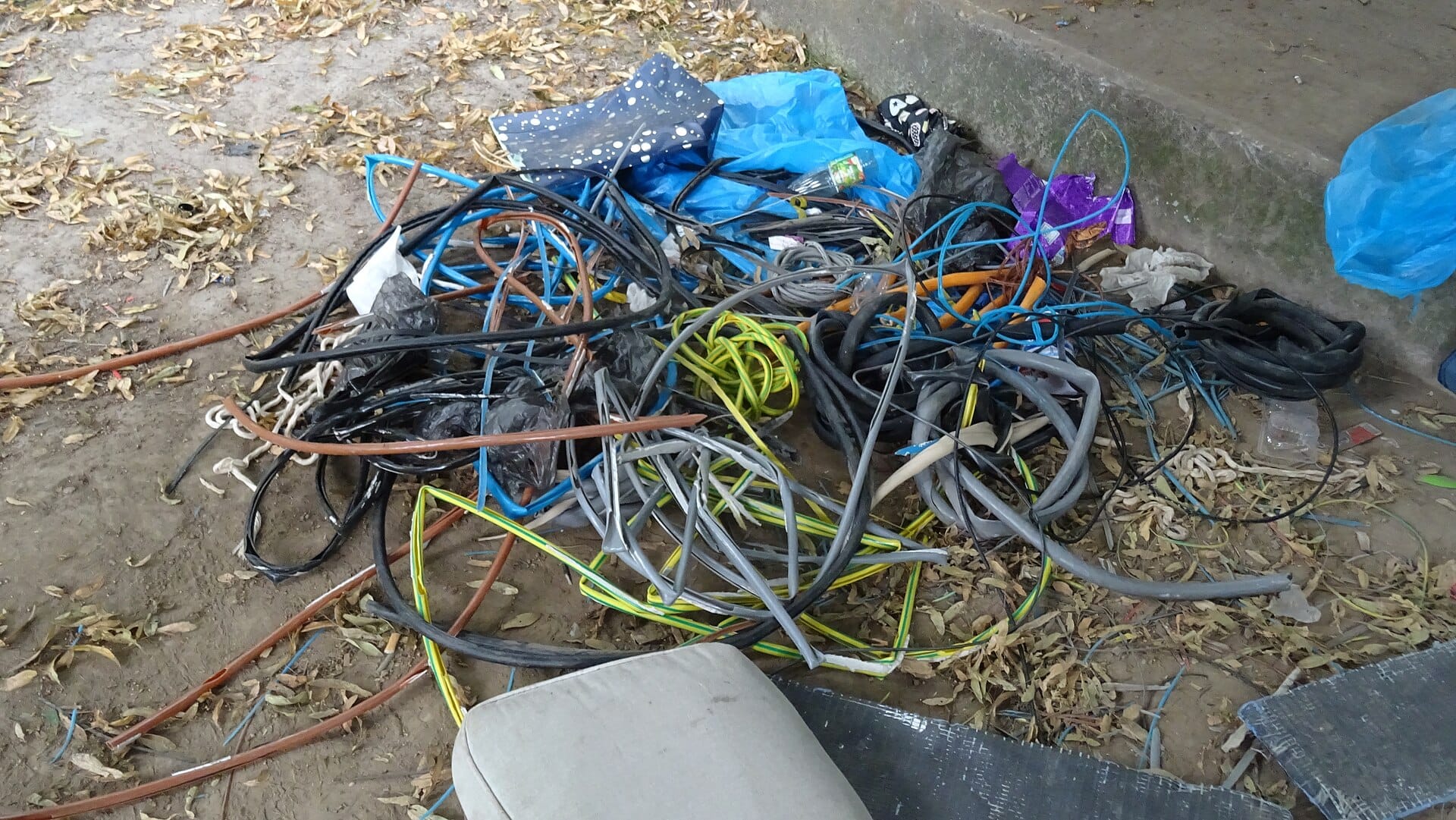
A theft is usually discovered through an absence. The inverter that was on the wall when you left for work is gone, the battery room is open, the DC cable has been cut cleanly and coiled, and the panels are still on the roof, shining at nobody. On a compound in a southern Nigerian city that is a Tuesday morning problem, and it is a solar panel theft problem in the sense that matters: not the glass on the roof, but the equipment that made the roof worth having.
No reliable national data exists on theft from privately owned rooftop systems in Nigeria, and the absence is itself part of the problem. No baseline, no trend, and no insurer can price what it cannot measure. What follows is built from how the crime behaves and what has stopped it in practice.
What thieves actually take
Be precise about the target list, because most advice on solar panel theft is written for a theft that barely happens here.
Panels are almost never the first choice. A module is heavy, brittle, awkward to carry, and worth little second-hand to anyone but a scrap dealer buying glass and aluminium. A panel left on the roof is more often evidence than loss. What goes first is lithium, then copper, then the inverter, in that order, because the sequence follows resale value per kilogram and ease of concealment.
Copper is the one people underestimate. In a domestic array the cable runs are the bulkier metal on site, they are easy to cut, and a scrap buyer will take a bundle without asking. A theft that begins as an attempt to remove a battery frequently ends with every accessible cable taken too, so a cable theft can bring down an otherwise intact system.
Roof tiles, water tanks, meters, distribution boards and unopened solar street lights are taken too, and street lighting assets have been a repeated target. The pattern is worth naming: anything on a pole or a wall in a semi-public place, by an organisation with a budget, is inventory.
Why batteries and inverters are the targets
The economics are simple. New lithium batteries are expensive, genuinely in demand, and easy to test before sale because a working battery can be connected to a suitable charger. Second-hand lead acid is worth less and more awkward, which is one reason battery theft has worsened as lithium has spread.
The scale is not hypothetical. Nigerian police have reported recovering four hybrid solar batteries valued at about eight million naira, allegedly taken from a telecommunications facility in Offa, Kwara State, with suspects arrested while transporting them. The Punch reported that recovery and the arrests in Oyo State. Lagos NSCDC has separately reported arrests over stolen lithium batteries from a premises in Lekki, alongside cases involving inverters and armoured power cable. The Guardian reported those Lagos arrests.
Two things follow. A lithium bank in a ground-floor store is a target whose value can be estimated from the outside, because lithium inverter systems are a known product. And theft of grid infrastructure is a well-documented national problem, with losses to distribution companies and restoration costs running into billions of naira. Premium Times has documented both electricity theft and infrastructure vandalism as persistent threats to the power sector. A home system is not on that grid, but it sits in the same environment.
Deterrence that works and deterrence that only looks good
Products sold to prevent solar panel theft fall into two groups: those that raise the time and effort required, and those that do not and are bought anyway. Sorting them is worth ten minutes of your money.
| Measure | What it actually changes | Honest verdict |
|---|---|---|
| Lockable steel battery cabinet bolted down | Turns a two-minute job into a window-pane and bolt-cutter job | The single highest-value item on this list for a home system |
| Steel mesh or expanded metal cage over the bank | Prevents a brick through a plastic cabinet | Cheap, effective, and must not block the ventilation the bank needs |
| Flush-mounted, tamper-resistant hinges and a cam lock | Removes the hinge screw in about a minute | Worth specifying; a standard cabinet door is the weak point, not the walls |
| Visible anti-theft cable locks on the inverter | Slows removal; a determined thief cuts the cable | Raises effort, does not stop anyone patient |
Read that table as a ranking, not a shopping list. The order is effort per naira spent, and a bolted steel cabinet above head height with a mesh cover that does not obstruct airflow defeats almost every opportunistic attempt.
Cables, panels and the locks worth buying
Physical security is wider than the battery, and security for inverters, batteries and distribution boards covers siting and anchoring. Three points belong here because they are theft-specific.
Route conduit properly. Unprotected cable on a wall is an invitation with a price tag. Rigid conduit or a steel duct from the array to the inverter means a thief must bring tools and make noise, and it protects the insulation from the UV and rodent damage that causes the fires covered elsewhere on this site.
Anchor the array. Roof modules sit on clamps and rails rather than bolts into the roof, so an array can often be lifted with the right leverage. On a ground mount, the fixings are the first thing specified properly and the first a hurried installer omits.
Be realistic about locks. A good padlock on a good hasp beats a cheap padlock on a good hasp. Anti-theft cable locks stop a casual removal by someone carrying something bulky through a gate. They do not stop a prepared person with bolt cutters, and any seller claiming otherwise is selling a feeling, not a product.
Markings, records and the insurance file
Three documents do more for you after a theft than any amount of hardware does beforehand.
The first is an asset register: manufacturer, model and serial number of the inverter, every battery, the charge controller and the dongle, with photographs of each in place and a copy of the invoice. Police reports are easier to write when you can state what was taken, and insurers decline vague claims. Photographs also help if recovered stock appears on sale nearby.
The second is the installation documentation: a one-line diagram, string layout and a marked location of every device. If a wall is opened during a burglary, you can show a technician where things went without tearing up finishes looking for them.
The third is the insurance conversation, which belongs before installation. Cover for the equipment differs from cover for the building, and a fire policy does not automatically respond to a stolen inverter. Ask in writing which items are covered, what proof of ownership is needed, and whether an approved contractor is required. The general principles of physical security are unglamorous but unchanged: layers, distance, time and obscurity, in that order of reliability.
Solar panel theft: the first twenty-four hours
If it happens, the first day decides whether you get the equipment, the money or neither.
- Make it safe first. A cut cable and an opened battery cabinet are an electrical hazard before they are a crime scene. Keep everyone away from exposed DC conductors in daylight.
- Photograph everything before tidying. Open cabinet doors, cut cable ends, empty mounting points, tyre marks. Do not clear or repair until the scene is documented.
- Call the police and get a reference number. Ask for it, write it down, and give the officer the serial numbers. A report with serial numbers is a report.
- Tell your insurer the same day and follow the policy’s notification process.
- Check what the theft did not take. A removed array or cut cable leaves the system unsafe to switch on, which is now an electrical problem as well as an insurance one. Have it checked before anyone re-energises it.
One more thing worth saying plainly. Monitoring that reported a sudden drop and a long absence of data before anyone noticed is doing something after a theft, even if it only tells you when to call the police. solar monitoring security covers making sure that data is still arriving, and the routine in our maintenance checklist will catch a cable fault left behind.
Frequently asked questions
How do I stop thieves taking my solar inverter?
Move it if you can, bolt it if you cannot, and put it out of sight from the street. A steel cabinet above head height with a cam lock and tamper-resistant hinges does most of the work available to a household. A padlock on a sheet-metal box does much less, because the sheet metal is the failure point, not the lock.
Should I add a tracker to my batteries or inverter?
Possible, and the devices exist, but be realistic about the conditions. A tracker needs a cellular signal, a subscription, its own working battery and a charge port that has not been cut. If a thief takes a sealed lithium bank, a tracker inside the enclosure does not get the bank back. Trackers earn their money on a vehicle or a portable system, not a fixed install in a walled compound.
Does insurance cover solar panel theft in Nigeria?
It can, but rarely automatically, and often only where the system was installed by a contractor the insurer recognises. Cover for a stolen inverter is distinct from fire damage to the roof. Ask in writing before installation and keep every invoice, because a claim declined for lack of a professional installation record is entirely preventable.
Key Takeaways
- Batteries and copper cable are the targets. Panels left on the roof are usually evidence rather than loss.
- Raising effort beats blocking everything, and a bolted steel cabinet above head height does most of the available work.
- Record serial numbers, photograph the install and keep invoices, because a police report without them is weak.
- Insure the equipment, not just the building, and confirm the installer must be approved before you commission anything.
- In the first day after a theft, make it safe, photograph the scene, get a police reference number and tell the insurer.
- A cut cable is now a fire and shock hazard, so have the system checked before anyone re-energises it.
If the money is the issue and you are sizing a bank for a home, battery bank sizing is worth reading properly, because an oversized bank in one place is a bigger prize than it needs to be.
Sources: Punch, arrests in Oyo and recovery of about eight million naira of stolen solar equipment; Guardian Nigeria, NSCDC arrests over stolen lithium batteries, inverters and armoured cable in Lagos; Premium Times, electricity theft and infrastructure vandalism in Nigeria’s power sector; Physical security, the layers of deterrence, delay and detection.


0 Comments